Dana Lang · 3 October 2026
How Voice Search Patterns Reshape Internal Linking Structures in Local Business Directories
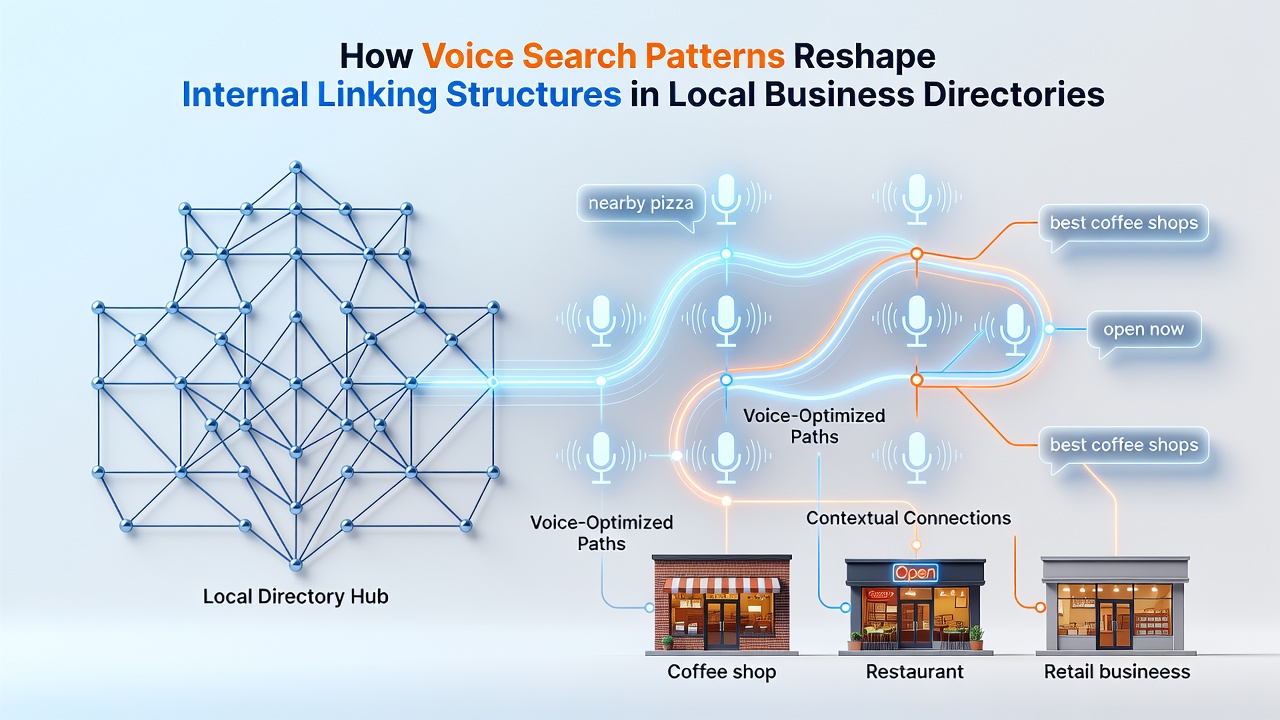
Voice search adoption reached notable levels by October 2026, with data from multiple regions indicating that conversational queries now account for a substantial share of local business lookups in directories worldwide. Researchers tracking these patterns report that users phrase requests as full questions or commands rather than keyword strings, and this shift prompts directory operators to reorganize internal links so that related pages connect through natural language pathways instead of traditional category hierarchies.
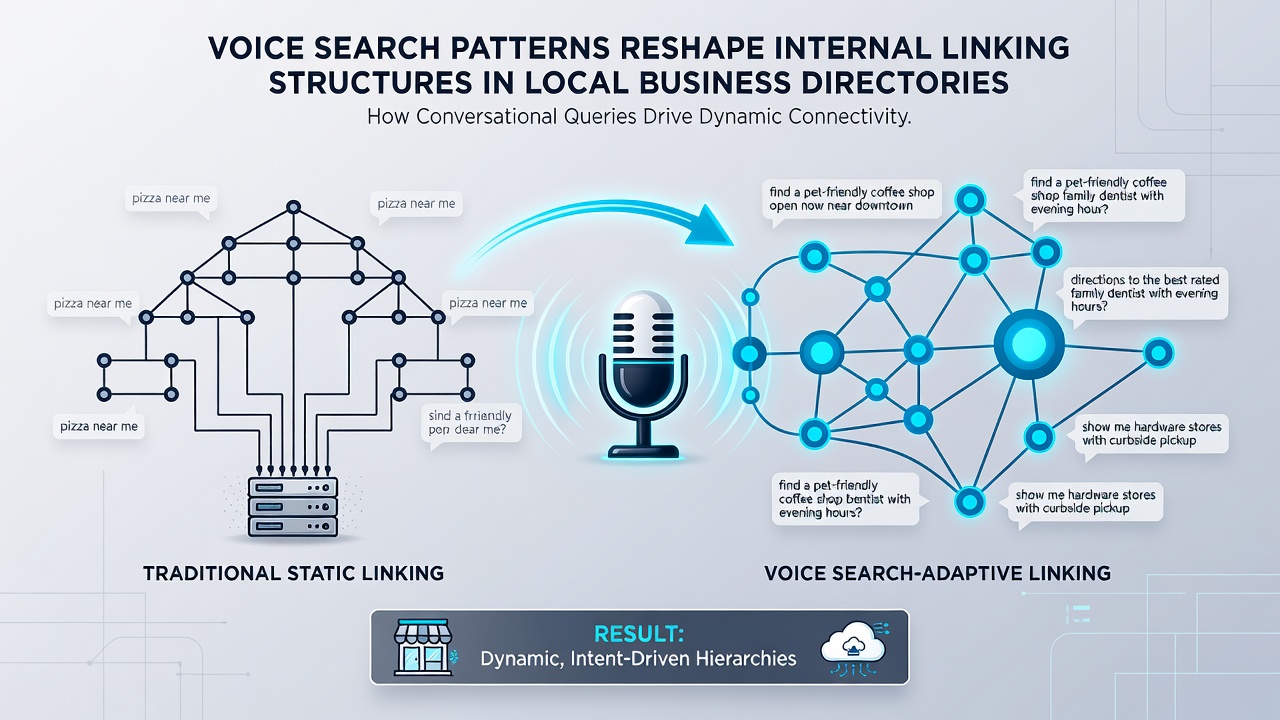
Local business directories maintain large networks of pages for individual listings, category overviews, and location-specific guides, yet voice queries often bypass shallow navigation structures. Studies from academic institutions in North America and Europe demonstrate that voice assistants prioritize pages with dense clusters of contextually linked content, which allows algorithms to surface deeper directory entries more readily during spoken interactions.
Voice Query Characteristics and Directory Navigation
Analyses of voice search logs reveal that queries frequently incorporate modifiers such as “near me,” “open now,” or “best rated for families,” and these elements require directories to create internal links that bridge listing pages with supplementary resources like review summaries or service comparisons. Observers note that text-based searches once relied on exact-match anchor text, whereas voice patterns favor descriptive phrases that mirror spoken sentences, leading administrators to revise link labels across thousands of internal connections.
Figures from government digital economy reports in the European Union and Canada show steady growth in voice-enabled device usage among small business seekers, and this trend correlates with changes in how directories structure their site maps. Directory teams therefore map internal links around topic clusters that anticipate follow-up questions, such as connecting a restaurant listing directly to menus, hours, and nearby parking options within a single conversational flow.
Adjustments in Link Architecture
Internal linking structures evolve when directories introduce hub pages that aggregate voice-friendly content, and these hubs then distribute authority through contextual anchors rather than generic navigation menus. Data indicates that pages optimized for voice queries receive more crawl attention when linked from multiple thematically related sections, prompting developers to audit existing link graphs and insert additional connections between long-form guides and individual business profiles.
One documented case involved a regional directory that reconfigured its internal links after analyzing voice session data, resulting in improved indexation of subpages that previously sat several clicks deep. Administrators achieved this by embedding links within answer-style paragraphs that match common voice phrasing, and similar approaches appear in directories across Australia and the United States where regulatory bodies track digital accessibility metrics.
Data Patterns Observed in 2026
Research compiled through October 2026 highlights that voice searches generate longer session paths within directories because users issue sequential questions, and this behavior rewards sites that maintain robust internal link networks capable of guiding visitors across related topics without returning to the homepage. Reports from industry research groups in Asia and Europe further show that directories incorporating schema markup alongside revised internal links experience higher retention of voice-driven traffic.
Directory operators now examine query logs to identify recurring phrase patterns, then create dedicated internal pathways that connect listings with explanatory content such as neighborhood guides or service comparisons. These adjustments reduce bounce rates during voice sessions, according to metrics shared by small business development agencies in multiple countries.
Implementation Approaches Across Regions
Teams managing large directories in the United Kingdom and New Zealand have adopted systematic audits that map voice query clusters to specific internal link placements, and these audits often reveal underutilized pages that gain visibility once linked conversationally. Practitioners insert links within content blocks that answer partial questions, allowing the structure to support multi-turn voice interactions without requiring users to navigate manually.
Additional evidence from university-led studies indicates that directories employing anchor text drawn directly from transcribed voice queries achieve stronger topical relevance signals, and this practice spreads as more operators integrate speech-to-text analytics into their content management workflows.
Conclusion
Voice search patterns continue to influence how local business directories organize internal links, with evidence from diverse regions demonstrating measurable shifts toward conversational anchor text, topic clusters, and hub-based navigation. Directory operators who align their link structures with observed query behaviors position their sites to handle increasing volumes of spoken searches while maintaining clear pathways between related business information.