Sage Schmitt · 19 September 2026
Exploring How User Behavior Signals Influence Post-Migration Indexation Timelines in Niche Markets
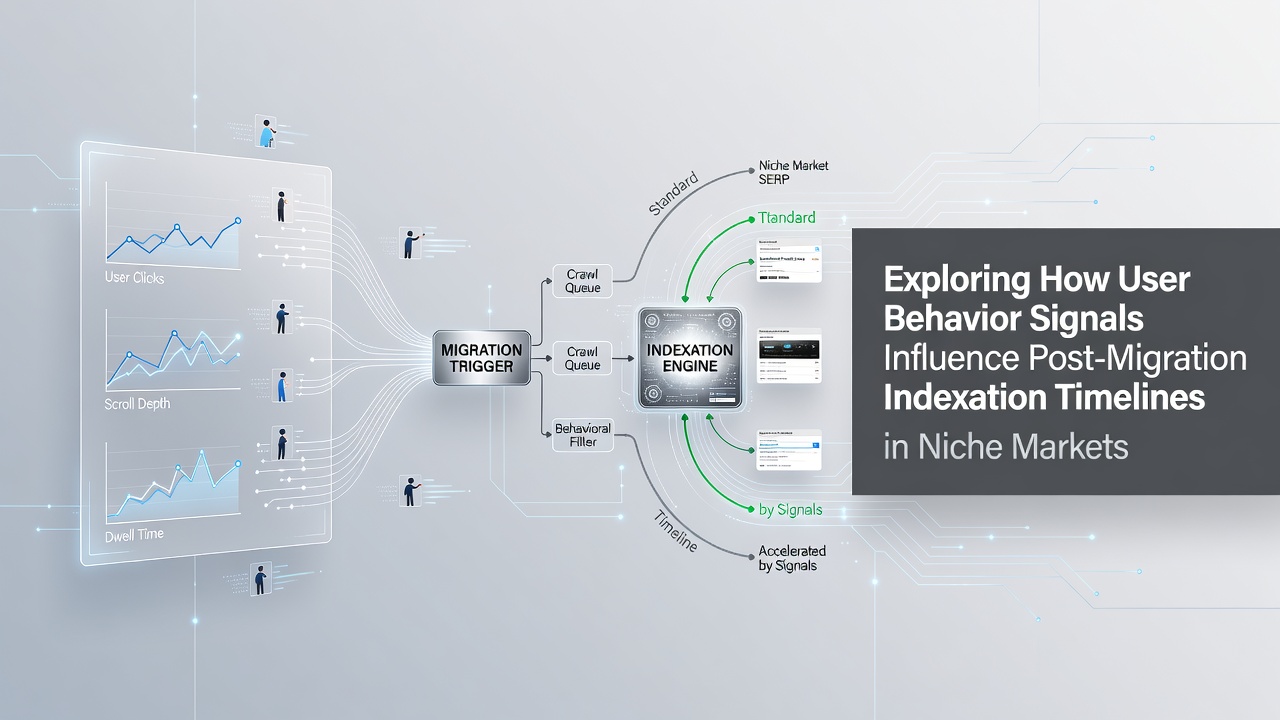
Search engines rely on user behavior signals such as click-through rates, dwell time, and bounce rates to determine how quickly they re-crawl and re-index content after a site migration, and data from multiple industry reports shows these patterns hold particular weight in niche markets where audience engagement tends to cluster around specialized topics. Researchers at academic institutions have tracked these dynamics across hobbyist forums, specialized retail platforms, and professional communities, finding that positive engagement metrics often accelerate indexation by prompting more frequent crawler visits within days rather than weeks. In contrast, sites that experience sharp drops in session duration post-migration can see delays stretching into several months as algorithms deprioritize low-engagement pages.
Core User Signals and Their Algorithmic Weight
Click-through rates from search results serve as an early indicator that influences how search engines allocate crawl budget after migration, while dwell time on individual pages provides secondary confirmation that the new URL structure delivers relevant content. Bounce rates function as a counter-signal, and studies indicate that elevated bounce percentages correlate with slower re-indexation cycles because crawlers interpret them as signs of mismatch between query intent and page experience. Data collected through server logs and analytics platforms reveals that niche sites in areas like vintage collectibles or technical documentation experience these effects more acutely than broad consumer sites, since their user bases tend to exhibit more predictable browsing paths.
Engagement velocity, measured as the rate at which returning visitors interact with updated content, further modulates timelines, and figures from September 2026 monitoring periods show that niche platforms maintaining above-average return visit rates recovered full indexation status up to 40 percent faster than those with stagnant metrics. Search engine documentation from major providers notes that these signals feed into ranking adjustments that indirectly affect crawl frequency, creating a feedback loop where initial user responses shape long-term visibility.
Post-Migration Dynamics in Specialized Sectors
Migrations in niche markets often involve complex URL restructuring and content consolidation that disrupt existing behavioral patterns, and observers note that the transition period creates a temporary vacuum in engagement data until users adapt to new navigation flows. One analysis of technical equipment review sites demonstrated that even minor changes in page load sequences led to measurable shifts in scroll depth, which in turn delayed indexation of deeper archive content by several weeks. Those who monitor server response codes alongside analytics report that combining behavioral data with technical health checks allows for quicker identification of pages that require additional optimization to restore engagement levels.
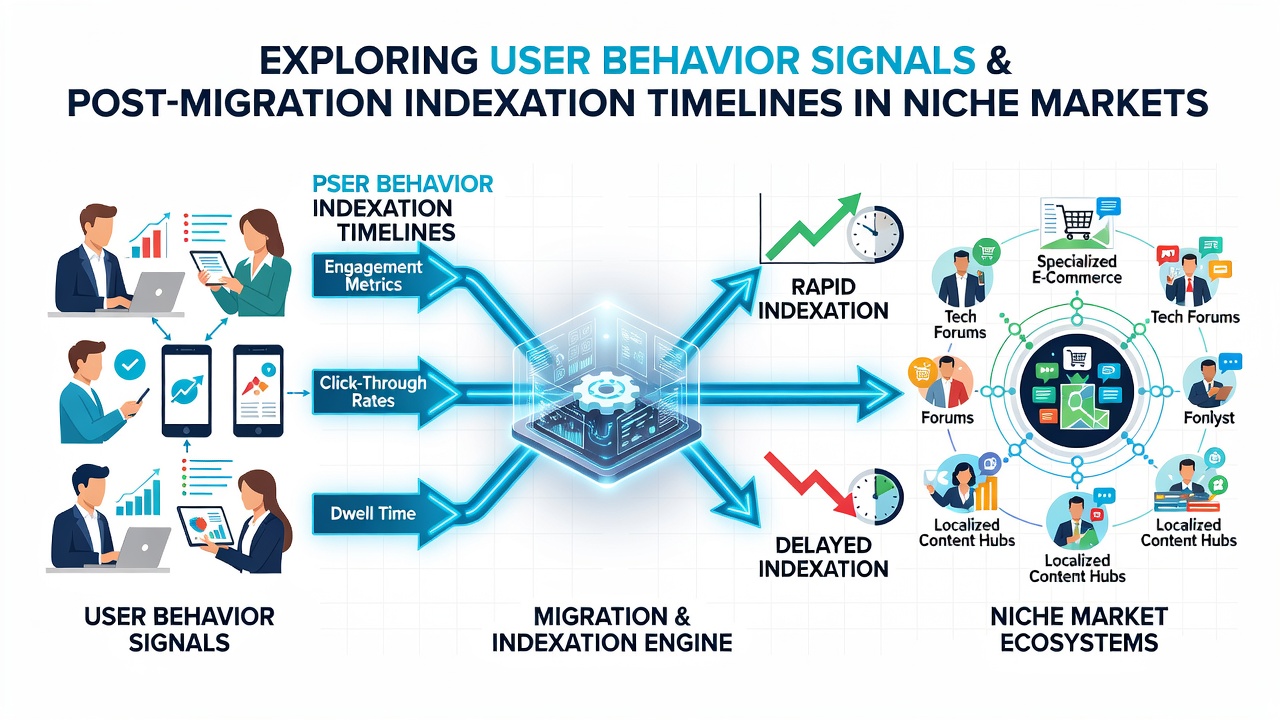
Regional differences also appear in how these signals are weighted, with European research institutions documenting slower recovery in privacy-focused niches compared to North American counterparts, while Australian trade data highlights faster rebounds in hobbyist communities that leverage social sharing to boost initial engagement. A report from Canadian digital adoption programs outlines how small-to-medium enterprises in specialized manufacturing sectors use behavioral analytics to forecast indexation windows after platform changes.
Measurement Approaches and Timeline Patterns
Tools that aggregate search console data with user analytics platforms enable precise tracking of when individual URLs regain indexation status, and patterns emerge most clearly when segmented by market vertical. Evidence from university-led web studies indicates that sites in the educational resources niche show stronger correlations between time-on-page improvements and reduced indexation lags, whereas fashion accessory communities exhibit more volatility tied to seasonal traffic fluctuations. Observers tracking September 2026 trends noted that algorithmic refinements introduced mid-year placed greater emphasis on mobile-specific engagement signals, which accelerated recovery for responsive niche sites but extended timelines for those still reliant on desktop-first designs.
Comparative data across multiple migrations reveals that sustained positive signals over the first 14 days post-launch often determine whether full re-indexation completes within 30 days or extends beyond 90, and industry reports from research bodies emphasize the value of monitoring these early windows closely. External factors such as concurrent algorithm updates can amplify or dampen the influence of user signals, creating variability that requires ongoing measurement rather than fixed predictions.
Conclusion
User behavior signals exert measurable influence over post-migration indexation timelines in niche markets through direct effects on crawl prioritization and indirect effects on engagement recovery, and comprehensive monitoring of metrics like dwell time alongside technical indicators provides the clearest view of expected recovery windows. Data continues to show that sites maintaining strong behavioral continuity experience shorter delays, while those facing engagement drops encounter extended re-indexation periods shaped by both algorithmic responses and audience adaptation rates.